帯状疱疹ワクチンのご案内——ワクチンの種類とその違い、そして当院の方針について
50代を過ぎたら、帯状疱疹予防を考える意味があります
帯状疱疹は、子どもの頃にかかった水ぼうそうのウイルスが、加齢や疲労、ストレスなどをきっかけに再び活性化して起こる病気です。日本の成人の多くはすでに原因ウイルスに感染した経験があるため、特別な方だけの病気ではありません。80歳までに約3人に1人が帯状疱疹を経験すると推定され、発症率は50歳代から上昇するとされています(Open Forum Infect Dis. 2017)。
帯状疱疹は、皮膚の症状だけでは終わらないことがあります
帯状疱疹では、神経に沿って痛みやかゆみがあらわれ、その後、赤みや水ぶくれが帯状に出現します。皮膚症状が落ち着いたあとも痛みが長く残ることがあり、これを帯状疱疹後神経痛(PHN)といいます。PHNは日常生活や睡眠に大きな影響を及ぼすことがあるため、帯状疱疹では「かかってから治す」だけでなく、「かかる前に予防する」視点が大切です。
帯状疱疹ワクチンには2種類あります
帯状疱疹ワクチンには、「生ワクチン」と「組換えワクチン」の2種類があります。両者には、接種回数、接種方法、予防効果、効果の持続、接種できる条件などに違いがあります。患者さんにとっては、どちらを選べばよいのか迷いやすいところですが、予防の考え方を整理すると違いが見えやすくなります。
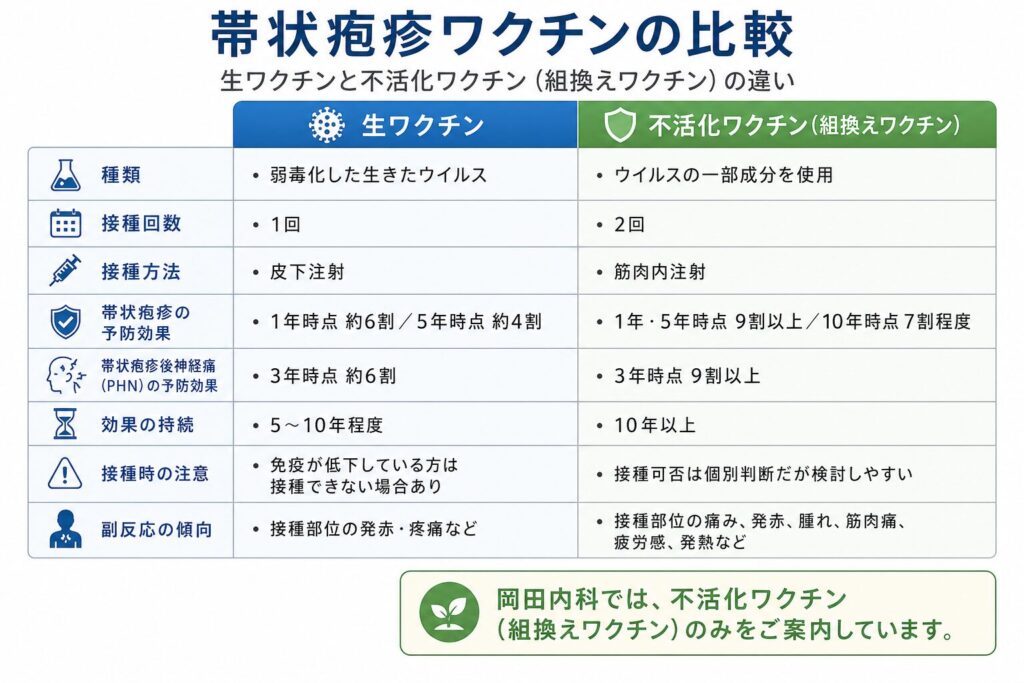
岡田内科では、帯状疱疹そのものの予防に加え、発症後に長引く痛みまで見据えた予防を大切にしています。そのため当院では不活化ワクチンのみをご案内しています。これは、発症予防と帯状疱疹後神経痛の予防を重視したいという当院の方針によるものです。
当院が不活化ワクチンを採用している4つの理由
高い予防効果が示されているため
厚生労働省の公表では、不活化ワクチンは帯状疱疹に対して、接種後1年・5年時点で9割以上、10年時点でも7割程度の予防効果が示されています。また、帯状疱疹後神経痛に対しても、接種後3年時点で9割以上の予防効果が報告されています。つまり、不活化ワクチンは生ワクチンよりも高い予防効果が示されています(N Engl J Med. 2015)。
長引く痛みまで見据えた予防を重視しているため
帯状疱疹は、皮膚の症状が治ったあとも痛みが残ることがあり、これが生活の質を大きく下げる原因になります。当院では、単に発症を防ぐだけでなく、その後の神経痛リスクまで考えた予防を大切にしています。
患者さんにわかりやすく、一貫してご案内しやすいため
ワクチンの種類を一本化することで、接種回数、期待される効果、副反応、接種スケジュールについて、患者さんによりわかりやすくご説明しやすくなります。「どちらを選べばよいか迷って決められない」という負担を減らし、納得して予防に進んでいただけるよう配慮しています。
接種の選択肢として相談しやすい特徴があるため
生ワクチンは、病気や治療の影響で免疫機能が低下している方には接種できない場合があります。一方、不活化ワクチンは生ワクチンとは異なる性質を持つため、接種の選択肢として検討しやすい特徴があります。実際の接種可否については、年齢、既往歴、現在の治療内容、体調などを踏まえて医師が個別に判断します。
接種前に知っておきたいこと
接種回数と副反応について
不活化ワクチンは通常2回接種が必要です。また、接種部位の痛み、発赤、腫れのほか、筋肉痛、疲労感、頭痛、発熱、悪寒、胃腸症状などがみられることがあります。まれではありますが、重い副反応としてショック、アナフィラキシー、ギラン・バレー症候群などが報告されています。当院では、効果だけでなく、こうした注意点も含めて十分理解した上で、接種をご検討いただいています。
定期接種や助成対象年齢について
帯状疱疹ワクチンは、2025年度から定期接種化され、65歳を迎える方などが対象となっています。さらに2025年度から2029年度までの経過措置として、その年度内に70歳、75歳、80歳、85歳、90歳、95歳、100歳となる方も対象です。費用助成や具体的な手続きは自治体によって異なる場合があるため、詳しくはお住まいの自治体情報をご確認ください。
ご予約・ご相談について
帯状疱疹ワクチンの接種をご希望の方、対象年齢や助成制度を確認されたい方は、どうぞ岡田内科までお問い合わせください。
ご予約は、ウェブ予約またはお電話・受付窓口にて承っております。
将来の痛みや生活への影響を見据えた予防について、どうぞお気軽にご相談ください。
大林賢史
Kenji Obayashi, MD, PhD
医師の研究者プロフィールはこちらから
Why It Makes Sense to Think About Shingles Prevention After Age 50
Shingles is a condition that occurs when the varicella-zoster virus — the same virus that causes chickenpox in childhood — becomes reactivated later in life due to aging, fatigue, stress, or other factors. Because the majority of adults in Japan have already been infected with this virus at some point, shingles is by no means a condition that affects only a select few. It is estimated that approximately one in three people will experience shingles by the age of 80, and the rate of onset is known to rise from the 50s onward.
Shingles Can Go Beyond Skin Symptoms
Shingles initially presents as pain or itching along a nerve pathway, followed by the appearance of redness and blisters in a band-like pattern. Even after the skin symptoms have resolved, pain can persist for a prolonged period — a complication known as postherpetic neuralgia (PHN). Because PHN can significantly affect daily life and sleep, it is important to consider not only treating shingles after it occurs but also preventing it before it happens.
There Are Two Types of Shingles Vaccine
Two types of shingles vaccine are available: a live vaccine and a recombinant vaccine. These differ in the number of doses required, the method of administration, the level of preventive efficacy, the duration of protection, and the eligibility criteria for vaccination. While patients often find it difficult to decide between the two, understanding the underlying principles of prevention can help clarify the differences.
Our Approach at Okada Clinic
At Okada Clinic, we value prevention that addresses not only shingles itself but also the prolonged pain that can follow an episode. For this reason, our clinic offers only the inactivated (recombinant) vaccine. This reflects our policy of prioritizing both the prevention of shingles and the prevention of postherpetic neuralgia.
Four Reasons We Use the Inactivated Vaccine
It has demonstrated a high level of preventive efficacy. According to data published by Japan’s Ministry of Health, Labour and Welfare, the recombinant vaccine has shown a preventive efficacy of over 90% against shingles at one and five years after vaccination, and approximately 70% even at the ten-year mark. It has also been reported to provide over 90% efficacy against postherpetic neuralgia at three years after vaccination.
We prioritize prevention that accounts for long-lasting pain. After the skin symptoms of shingles have healed, pain can persist and significantly diminish quality of life. At our clinic, we believe it is important not simply to prevent the onset of shingles but to consider the risk of subsequent neuralgia as well.
It allows us to provide clear and consistent guidance to patients. By offering a single type of vaccine, we are able to explain the number of doses, expected efficacy, potential side effects, and vaccination schedule in a more straightforward manner. This approach reduces the burden of patients feeling unable to decide between two options and helps them move forward with prevention with confidence.
It has characteristics that make it easier to consider as a vaccination option. The live vaccine may not be suitable for individuals whose immune function is compromised due to illness or treatment. The recombinant vaccine, however, has different properties, making it easier to consider as a potential option. Actual eligibility for vaccination is determined on an individual basis by a physician, taking into account the patient’s age, medical history, current treatments, and overall condition.
What You Should Know Before Getting Vaccinated
Number of doses and potential side effects. The recombinant vaccine typically requires two doses. Side effects may include pain, redness, and swelling at the injection site, as well as muscle pain, fatigue, headache, fever, chills, and gastrointestinal symptoms. Although rare, serious adverse reactions such as anaphylactic shock, anaphylaxis, and Guillain-Barré syndrome have been reported. At our clinic, we provide a thorough explanation of these potential risks alongside the benefits before patients decide whether to proceed with vaccination.
Routine immunization status and eligible age groups. The shingles vaccine became part of Japan’s routine immunization program starting in fiscal year 2025, with eligibility for individuals turning 65 and others who meet specific criteria. As a transitional measure from fiscal year 2025 through fiscal year 2029, individuals turning 70, 75, 80, 85, 90, 95, or 100 within the relevant fiscal year are also eligible. Because financial subsidies and specific procedures may vary by municipality, please check with your local government for details.
Appointments and Consultations
If you would like to receive the shingles vaccine, confirm your eligibility or available subsidies, or discuss whether vaccination is appropriate given your current health conditions or treatments, please do not hesitate to contact Okada Clinic.
Appointments can be made through our online booking system or by phone or at the reception desk. If you would like to discuss prevention with an eye toward avoiding future pain and its impact on your daily life, we welcome you to reach out at any time.
本稿は一部にAIを使用しています